
The Power of Online School in Boosting Mental Health
Why virtual learning can influence student mental health for the better
Mental health affects every part of life, from physical health, relationships, and learning. The impacts are vast and powerful which is why finding ways to improve one’s mental health is vital (Christensen et al., 2022). We all know the positive effects that physical activity, purpose, relationships, and a growth mindset can have on mental health, but what if we told you that virtual high school can also positively affect mental health too?
Ontario Virtual School, an accredited online high school based in Ontario, recognizes the strong connection between mental health and school performance. Our community helps students balance life and academics to make mental health well-being a priority with the aim of future success . Here are four ways that OVS sets up our program to increase mental well-being.
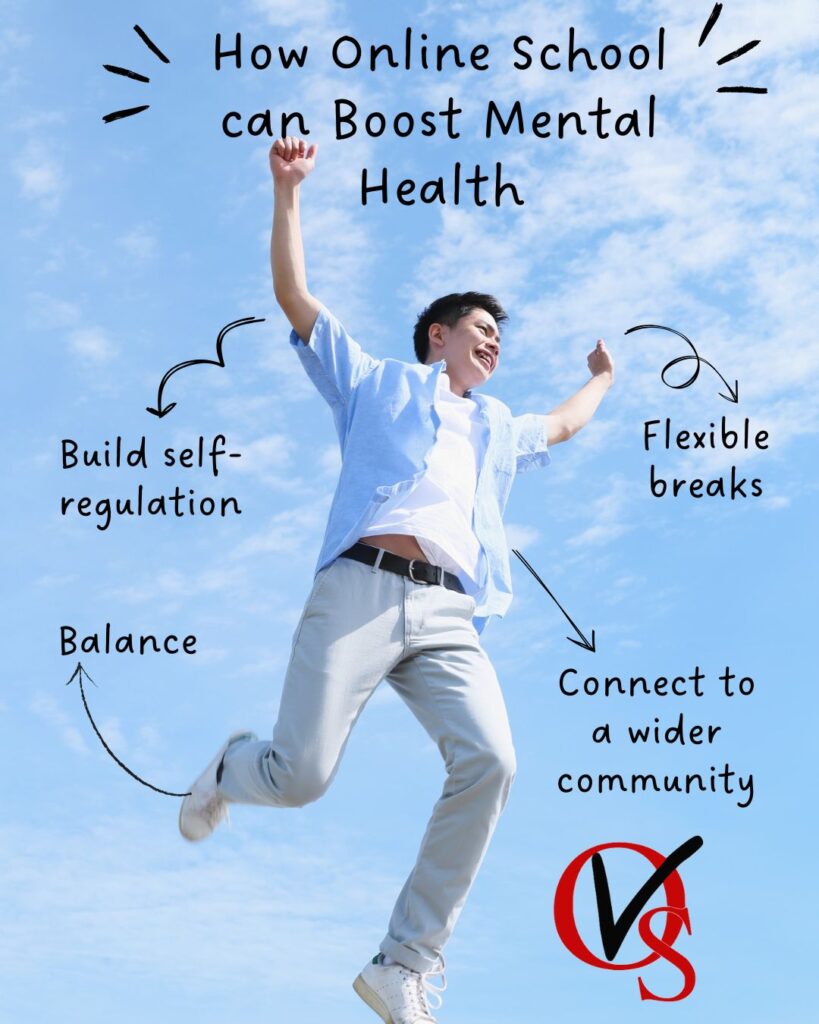
1. Flexible breaks
Life isn’t always predictable. Challenging situations, such as loss of a family member, can arise while students are preparing for a stable future. Pham et al. (2016) found that loss of a family member can “result in impairment of daily functioning”. Students need the proper time to grieve, and we understand that this looks different for everyone. Students shouldn’t need to worry about losing credits or their course averages decreasing due to challenges beyond their control and in hard times.
OVS provides students flexibility to extend their course a week past the one year given per course, pause their course for a month, or even be granted the ability to extend the course for three additional months. OVS is not just a program, we are a community of caring staff who put students first. Our educators are not only OCT certified, but are committed to help students thrive. For our teachers, education is not just a job, it’s a passion that goes hand in hand with supporting mental health.
2. Build self-regulation
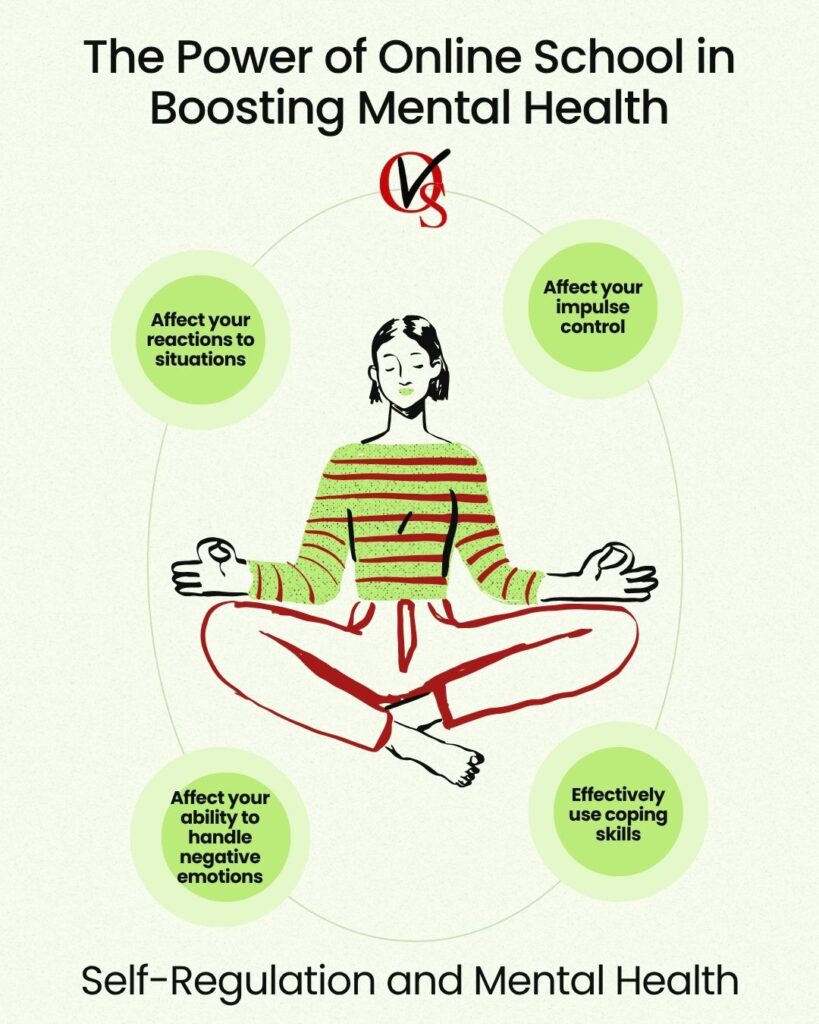
Self-regulation is the ability to manage one’s emotions, behaviors, and thoughts which is connected to mental health. A study by Robson, Allen and Howard (2020) showed that self regulation in children correlates to improved mental health in their future.
Virtual learning can help students build this self-regulation. In an online learning environment, students create their own schedules (or work with a guardian to do so) and monitor their progress towards goals. This process builds self-regulation skills, such as managing reactions to challenges, impulse control, tolerating negative emotions, and effectively using coping skills which support mental health. As students progress through their virtual learning journey, these skills will promote lasting mental well-being.
3. Connect to a wide community
Students from all over the world rely on OVS to prepare them to be global citizens, giving them the opportunities to work and live internationally after graduation. Within their courses, students connect with peers from all over the world. Connections help us develop a sense of belonging and are vital to positive mental health.
OVS promotes connection through discussion forums, strong teacher-student relationships, and attending community events. At OVS you will have a team of over 25000 students and over 200 staff members cheering you on.
In addition to connecting with a global community, virtual learning allows students to better maintain their existing support networks at home. Learning online gives students the flexibility to receive family support, attend appointments or participate in activities without the restrictions of a traditional school schedule. Whether connecting with family during the day, practicing with teammates, or attending a mental health appointment, support is always within reach.
4. Recognizing that life is not linear
When experiencing depression, children tend to show a decrease in interest in extracurriculars (Korcazak & Beiser, 2023). This can create a challenging cycle, because participating in extracurriculars can help improve depressive symptoms. Managing a diagnosis of depression while facing the demands of full day school in person, daily responsibilities, and activities can be overwhelming and can lead students to withdraw further. This is where virtual learning in the comfort of your home can be beneficial.
Virtual learning helps students maintain balance, especially when facing mental health challenges. Students enrolled in virtual learning still experience a sense of accomplishment when they complete assignments, but also preserve energy for enjoyable activities afterwards (Converse et al, 2023). The combination of productivity and enjoyment without taking a majority of their day can help students feel accomplished, better equipping them to succeed.
Ontario Virtual School does not just talk about the importance of mental health. By providing a virtual high school which supports resilience, balance, community and understanding, mental health supports are being implemented daily. To further see how OVS supports mental health, head over to our website or connect with our caring staff members to learn more.
Questions and Answers
Q1: How can online learning improve a student’s mental health?
A1: Online learning offers flexibility, reduces pressure, and allows students to learn at their own pace. This helps manage stress, build confidence, and create a healthier balance between school, family, and personal life.
Q2: Does virtual school still help students build social connections?
A2: Yes! Ontario Virtual School connects students worldwide through discussions, supportive teachers, and community events. This creates friendships and a sense of belonging while allowing students to maintain support systems at home.
Q3: What mental health benefits come from learning at your own pace?
A3: Working at your own pace helps students build self-regulation and resilience. It also allows time for rest, reflection, and self-care, which can reduce anxiety and improve overall well-being.
Resources
Cleveland Clinic. (2023, June 9). Emotional dysregulation: What it is, causes & symptoms. Retrieved October 19, 2025, from https://my.clevelandclinic.org/health/symptoms/25065-emotional-dysregulation
Dyregrov, A., Dyregrov, K., & Lytje, M. (2020). Loss in the family – A reflection on how schools can support their students. Bereavement Care, 39(3), 95-101. https://doi.org/10.1080/02682621.2020.1828722
Nash, C. (2023). Scoping review of self-directed online learning, public school students’ mental health, and COVID-19 in noting positive psychosocial outcomes with self-initiated learning. MDPI, 3(8), 1187–1208. https://doi.org/10.3390/covid3080084
Pham, S., Porta, G., Biernesser, C., Walker Payne, M., Iyengar, S., Melhem, N., & Brent, D. A. (2018). The burden of bereavement: Early-onset depression and impairment in youths bereaved by sudden parental death in a 7-year prospective study. American Journal of Psychiatry, 175(9), 887-896. https://doi.org/10.1176/appi.ajp.2018.17070792
Robson, D. A., Allen, M. S., & Howard, S. J. (2020). Self-regulation in childhood as a predictor of future outcomes: A meta-analytic review. Psychological Bulletin, 146(4), 324–354. https://doi.org/10.1037/bul0000227
Written By Katelyn Van Hezewyk (OVS Teacher)