
As caregivers, we have spent years anticipating our children’s needs and to set them up for success in all areas of life. Whether it was taking them to the park to practice soccer skills for an upcoming tryout, running lines late until the night to prepare our children for the school play, or helping to create study notes for the Science unit test, our commitment to supporting our children has been unwavering. And when it comes to preparing our children for post-secondary education, the sentiment is no different.
A Universal Feeling
Famous poet Kahlil Gibran understood the tension that lies between our desire to support our children, but to also recognize the need for independence. He writes:
Your children are not your children.
They are the sons and daughters of Life’s longing for itself.
They come through you but not from you,
And though they are with you yet they belong not to you.
You may give them your love but not your thoughts,
For they have their own thoughts.
You may house their bodies but not their souls,
For their souls dwell in the house of tomorrow, which you cannot visit, not even in your dreams.
You may strive to be like them, but seek not to make them like you.
For life goes not backward nor tarries with yesterday.
You are the bows from which your children as living arrows are sent forth.
The archer sees the mark upon the path of the infinite, and He bends you with His might that His arrows may go swift and far.
Let your bending in the archer’s hand be for gladness;
For even as He loves the arrow that flies, so He loves also the bow that is stable.
Setting our Children up for Success
While many of us know that attending post secondary education is a time for our children to flourish and discover themselves, we still want to ensure that we are fulfilling our role as caregivers by being part of the process as much as possible. This is why Ontario Virtual School, an accredited online high school in Ontario, prioritizes helping both caregivers and students during this important transition. Below are some of the ways that caregivers can support their teen for post secondary education and the resources that OVS provides:
- Encouraging Independence Through Gradual Responsibility
As much as we want to step in and help, one of the most valuable things we can do is begin to step back. Post-secondary environments expect students to advocate for themselves, manage their time, and take ownership of their learning, often without reminders. This doesn’t happen overnight. It’s built through small, intentional shifts. For example, allowing your teen to email their teacher, organize their own schedule, or navigate challenges independently before stepping in can help foster these skills. In fact, research from organizations like the OECD consistently highlights that students who develop autonomy in their learning are better prepared for success beyond high school.
→ How OVS Supports: Although OVS students are given the tools they need to take ownership of their learning, OVS recognizes the important role of caregivers. This is why caregivers can opt in to have their own parent log-in portal in order to check in on their student’s academic success at any time!
- Strengthening Study Habits and Time Management
Success in post-secondary education is not just about being academically smart. It’s also about being organized, consistent, and able to manage competing demands. The American Psychological Association emphasizes that skills like planning, organization, and task initiation are closely tied to academic success. This is why many students find the transition challenging not because of the content, but because of the increased workload and lack of structure. Helping your teen explore what works best for them, such as using a planner, breaking tasks into smaller steps, or setting aside dedicated study time, can make a significant difference.
→ How OVS Supports: Since OVS is an asynchronous online school, students are able to create a flexible schedule and learning pace that works for them. The only way to perfect the skill of organization and time management is to actually practice it! With the guidance of interactive learning modules and supportive OVS Staff, students learn in an environment where they can develop these key skills.
- Supporting Exploration of Pathways
There is no one “right” path after high school, and that’s an important message for both teens and caregivers to hear. Whether your child is considering university, college, apprenticeships, or taking time to explore different interests, what matters most is that the decision is informed and intentional. Resources like the Ontario Universities’ Application Centre and Ontario Colleges can help families better understand program options and requirements. Encouraging your teen to ask questions, attend open houses, or research areas of interest can help them feel more confident in their choices.
→ How OVS Supports: OVS students have the option to take courses in different pathways, such as Gr. 12 University English (ENG4U) or Gr. 12 College English (ENG4C). And if students aren’t sure which pathway is best, OVS offers Guidance Support to help both students and caregivers find the best fit.
- Building Financial Awareness and Life Skills
For many students, post-secondary education is their first real step into managing money and navigating day-to-day responsibilities. Understanding tuition costs, budgeting, and financial supports like OSAP can help reduce stress and build confidence. The Financial Consumer Agency of Canada highlights the importance of developing financial literacy early, noting that these skills play a key role in long-term well-being. Even simple conversations about budgeting, saving, or making financial decisions can have a lasting impact.
→ How OVS Supports: Since OVS is a private accredited online school, there is a fee for each course. Seeing the monetary value of a course can help students approach their studies with greater responsibility. With no additional hidden costs with OVS courses, students can begin building their financial awareness sooner rather than later.
- Nurturing Emotional Readiness and Resilience
Perhaps one of the most overlooked aspects of preparing for post-secondary education is emotional readiness. Leaving familiar routines, managing new expectations, and navigating independence can be both exciting and overwhelming. Organizations like the Canadian Mental Health Association remind us that many students experience increased stress during this transition. Helping your teen develop coping strategies, normalize setbacks, and know when to seek support can make all the difference.
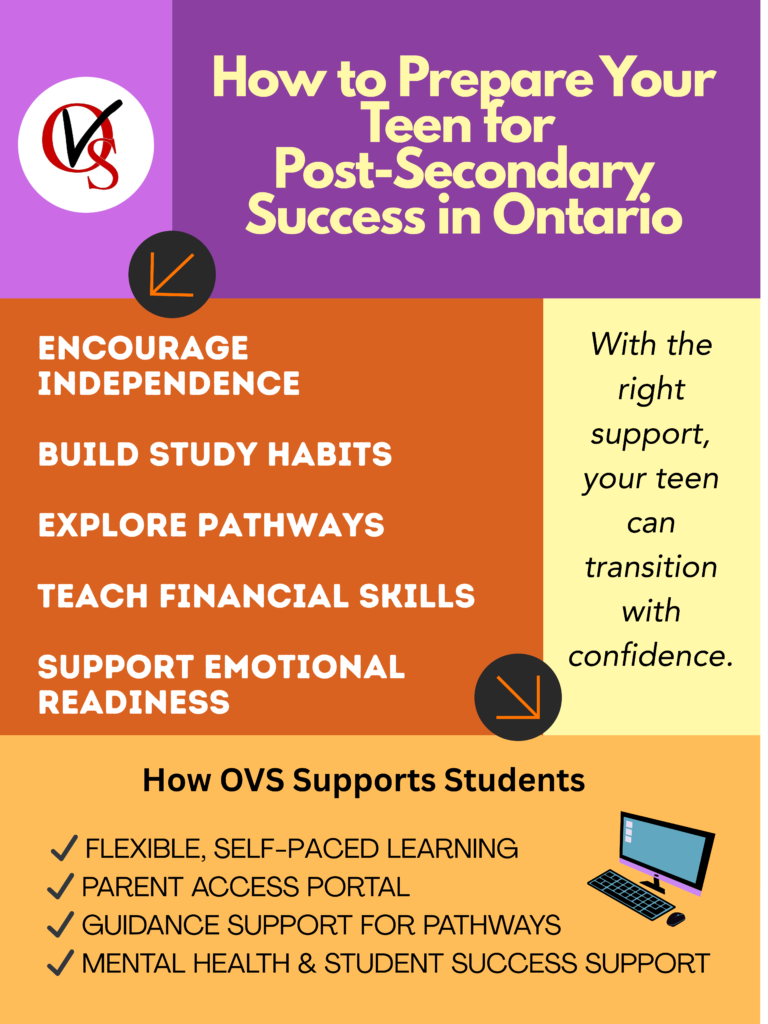
→ How OVS Supports: OVS understands the pressures of school, even before post secondary studies. That is why OVS offers Mental Health Supports to students and provides accommodations for students who require them. OVS also recognizes that students may need additional support, which is why the Student Success team reaches out to caregivers and students to report on course inactivity and offer support as needed.
Take the Next Step
Preparing your teen for post-secondary education isn’t about having all the answers or mapping out every step. It’s about creating opportunities for growth, encouraging independence, and trusting that the values and skills you’ve nurtured over the years will guide them forward.
Just as Kahlil Gibran reminds us, our children are not ours to shape entirely, but we do have the privilege of helping them take flight. If you’re looking for an alternative learning environment to support your child’s access, reach out to Ontario Virtual School today to explore all the courses they have to offer!
|
Frequently Asked Questions (FAQ) 1. When should I start preparing my teen for post-secondary education? 2. How involved should I be in my teen’s education as they prepare for post-secondary? 3. What if my teen doesn’t know what they want to do after high school? 4. What skills are most important for success in post-secondary education? 5. How can I support my teen if they are feeling overwhelmed about the transition? |