
Education is about more than just school subjects and grades; it’s about how we learn, think, and share knowledge and values across generations. At the same time, formal education plays an important role by providing structure, guidance, and opportunities for students to develop essential skills. In Canada, learning has long been highly valued, with a strong emphasis on knowledge, critical thinking, and academic achievement, which are priorities that continue to shape our education system today.
The OECD Recognizes Canada’s Top Education System
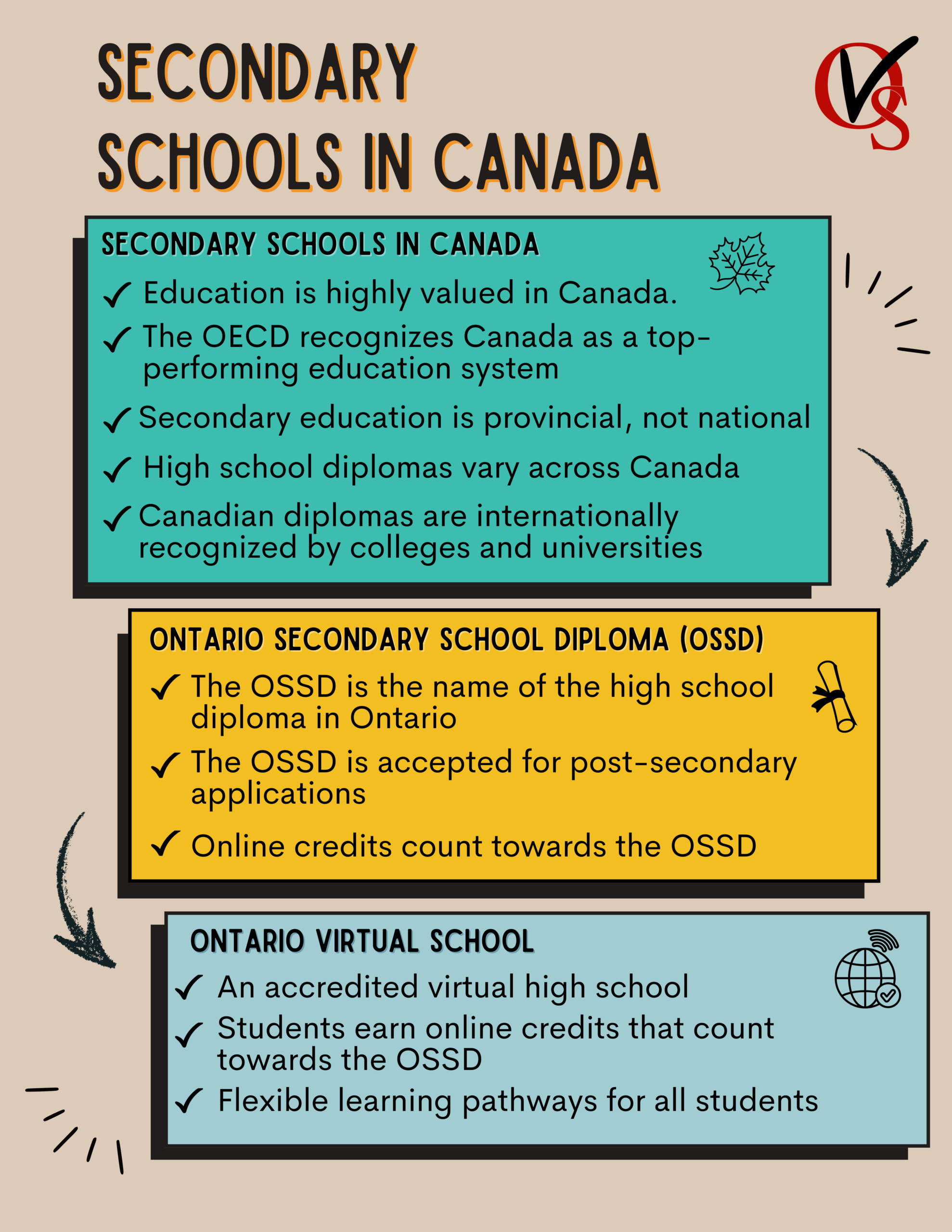
The OECD (The Organisation for Economic Co-operation and Development) is an international organisation that works to build better policies for better lives. Education is a top priority for the OECD because research has shown direct correlations between a good education and better outcomes for quality of life and well-being. According to the OECD, Canadian students receive 921 hours of compulsory instruction per year in primary education and 924 hours in lower secondary education. This is above the OECD average of 804 hours in primary and 909 hours in lower secondary education, demonstrating a strong commitment to prioritizing Canadian students’ future success.
Education Divided by Province and Territory
Although Canada as a whole places high value on education, education itself is decentralized. This means that each of the 10 provinces and 3 territories in Canada is responsible for the operation of each of its publicly funded K-12 school systems. While there are many similarities shared between each system, there are also important differences in curriculum, assessment, and accountability. These differences reflect each region’s unique geography, history, language, culture, and the specific needs of the communities they serve. Despite these differences, Canada’s comprehensive, diverse, and widely accessible education systems highlight the strong value Canadians place on education.
Getting a High School Diploma in Canada
Since each province and territory is responsible for the operations of their respective secondary schools, the requirements for obtaining a secondary school diploma differ from one province or territory to another. This means that the total number of credits and the types of compulsory vs. elective courses vary across the country. The chart below indicates the name of each province’s high school diploma and links to the specific requirements:
Region | High School Graduation Credential |
Ontario | |
British Columbia | |
Alberta | |
Québec | |
Manitoba | |
Saskatchewan | |
New Brunswick | |
Nova Scotia | |
Prince Edward Island | Prince Edward Island Senior High School Graduation Certificate |
Newfoundland & Labrador | |
Northwest Territories | |
Yukon | |
Nunavut |
Ontario Virtual School and the OSSD
Ontario Virtual School is an accredited online high school in Canada that supports students in obtaining online secondary school credits to fulfill requirements for the Ontario Secondary School Diploma (OSSD). This means that students can take courses with OVS, such as Gr. 12 English (ENG4U) online or Gr. 12 Math (MHF4U) online and have these credits count towards a high school diploma in Ontario. In turn, the OSSD provides students with the prerequisites needed to apply to a university or college in Canada.
Register Today
If you’re looking to earn credits towards a high school diploma in Ontario, then Ontario Virtual School can help. Explore all available online secondary courses or make an appointment with a Guidance Counsellor today!
Frequently Asked Questions (FAQ)
- Does Canada have one national high school diploma?
No. Canada does not have a single national high school diploma. Education is managed by each province and territory, meaning every region awards its own graduation credential (such as the OSSD in Ontario or the Dogwood Diploma in British Columbia). While the names and requirements differ, all diplomas represent successful completion of secondary school and are recognized by post-secondary institutions. - Are high school graduation requirements the same across Canada?
Not exactly. While provinces and territories share similar goals for student learning, graduation requirements vary by region. Differences may include the total number of credits required, compulsory courses, assessment practices, and graduation literacy or numeracy expectations. These variations reflect regional priorities, language, culture, and community needs. - Is a Canadian high school diploma recognized internationally?
Yes. Canadian high school diplomas are widely recognized and respected around the world. Canada’s strong performance in international assessments and its reputation for high-quality, equitable education mean that Canadian secondary school credentials are generally accepted by colleges and universities both in Canada and internationally. - Can students earn Ontario high school credits online toward the OSSD?
Yes. Students can earn Ontario Secondary School Diploma (OSSD) credits online through accredited institutions such as Ontario Virtual School. Online courses completed through an inspected private school count toward OSSD requirements and can be used to meet prerequisites for college or university applications in Canada.
Written by Natalie Tayler (OVS Teacher)